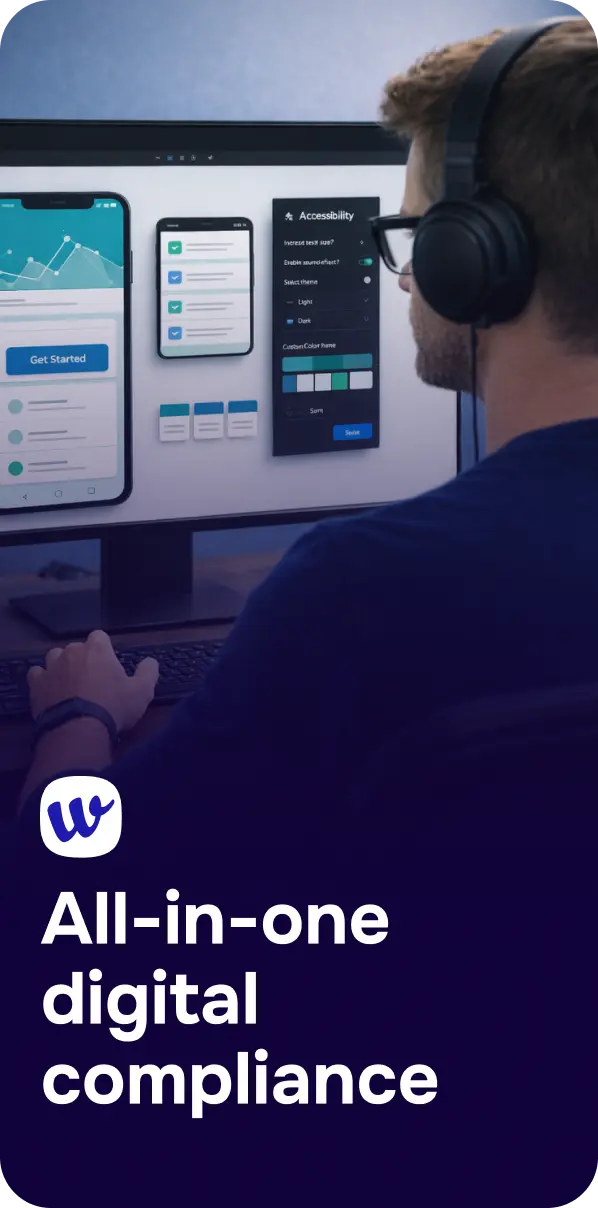
For many digital teams, accessibility remediation is where good intentions run into operational limits. Issues are identified, tickets are created, priorities shift, and fixes take longer than expected to reach production. That is why automated accessibility fixes are becoming an important part of modern compliance workflows.
But speed alone is not enough. If accessibility fixes are applied automatically without validation, teams may still face inconsistent results, unresolved barriers, or uncertainty about whether the changes truly support users. A stronger approach is to use quality-assured automated accessibility fixes: automation supported by testing, monitoring, and clear oversight.
For organizations working toward WCAG 2.2, ADA, EAA, or broader digital compliance goals, this approach helps reduce remediation backlog while improving confidence in what gets fixed and how it performs over time.

Automated accessibility fixes are system-driven changes applied to address detectable accessibility issues on websites or apps. These fixes can help teams respond faster to recurring technical problems, especially when they appear across multiple templates, components, or content types.
Quality assurance adds the control layer. Instead of treating automation as a one-time patch, teams validate that fixes are being applied correctly, monitor whether issues reappear, and review outcomes as part of an ongoing accessibility process.
Some accessibility issues are straightforward to detect, but remediation still needs to be reliable. A fix that appears successful in one context may behave differently in another browser, component state, device, or content layout. That is why automated remediation works best when paired with continuous auditing and monitoring.
Quality assurance helps teams answer practical questions such as:
Accessibility is not just a development concern. Compliance, legal, privacy, and digital teams often need evidence that accessibility work is active, repeatable, and measurable. A quality-assured process supports that need by combining remediation with reporting, monitoring, and documented follow-through.
This is especially valuable for organizations that want an always-on model rather than periodic cleanups. As discussed in AI Agents Are Here: How Autonomous AI Will Quietly Take Over Your Accessibility To-Do List, automation becomes more useful when it is part of a continuous operational system rather than a one-off project.
Not every accessibility issue should be treated the same way. The greatest value from automation usually comes from repeatable, machine-detectable problems that appear often and need consistent remediation at scale.
Large websites and apps often repeat the same patterns across many pages. When an issue exists at the template or component level, manual remediation can become slow and resource-intensive. Automated accessibility fixes can help teams address these recurring issues more efficiently and reduce the time between detection and correction.
Modern digital properties change constantly. New content, design updates, tag deployments, and code releases can introduce accessibility regressions at any time. In these environments, automated remediation becomes more effective when it is paired with real-time monitoring, so teams can catch and respond to issues continuously rather than waiting for periodic audits.
Accessibility rarely exists in isolation. Businesses often manage accessibility alongside cookie consent, privacy disclosures, legal documents, and technical SEO. A unified compliance workflow can make it easier to coordinate these responsibilities from one place, especially when teams need visibility across multiple obligations. For example, Corpowid also brings together accessibility, consent, legal, and company information within a single interface, as outlined in Inside the 4-in-1 Widget: Accessibility, Consent, Legal and Company Info in One Script.

If your organization is evaluating automated accessibility fixes, it helps to look beyond the idea of instant remediation and focus on the full workflow around it. Quality assurance depends on what happens before, during, and after the fix is applied.
Automation starts with identifying issues that can be reliably detected. Strong detection helps reduce noise and gives teams a clearer view of what should be remediated automatically versus what needs manual review.
Automated fixes should be applied in a structured, predictable way. The goal is not to force a generic change everywhere, but to address supported issues consistently where the platform can do so with confidence.
Accessibility is not static. Monitoring helps teams verify that resolved issues stay resolved and that new issues are surfaced quickly as content or code changes.
Compliance teams often need more than a dashboard score. They need evidence of activity, issue status, and remediation progress. Reporting supports internal governance and helps teams demonstrate ongoing effort.
Automation is powerful, but it does not replace expert judgment. Some accessibility barriers require manual testing, design changes, content updates, or code decisions that depend on context. Quality-assured automated accessibility fixes should support human expertise, not try to eliminate it.
This balance is especially important for organizations that also require formal documentation or conformance support, such as VPAT and ACR work, where audit-backed review remains essential.
The strongest accessibility programs are built around continuity. They do not rely only on one audit, one sprint, or one launch deadline. Instead, they create a repeatable process for finding issues, fixing what can be fixed quickly, and maintaining visibility over time.
Quality-assured automated accessibility fixes support that model in several ways:
For businesses managing multiple digital compliance requirements, this kind of continuous model can also reduce fragmentation between teams and tools. The same operational mindset that supports accessibility monitoring can also benefit privacy and consent governance. If your team is also reviewing website compliance more broadly, How to Run a Cookie Audit on Your Website in 5 Steps offers a useful example of how structured monitoring supports another critical compliance area.

When evaluating solutions, it is worth asking not just whether a platform offers automated accessibility fixes, but how those fixes are quality-assured. The difference matters.
Look for an approach that supports:
For many organizations, the goal is not to replace accessibility strategy with automation. It is to make accessibility operations more scalable, more consistent, and easier to sustain.
That is where quality-assured automated accessibility fixes can make a meaningful difference. They help teams move beyond reactive remediation toward a more reliable, always-on accessibility program.
No. Automated accessibility fixes can help resolve certain detectable issues quickly, but they work best as part of a broader accessibility program that includes monitoring, testing, reporting, and human review where needed.
Quality assurance means validating that automated fixes are applied correctly, checking that they actually resolve the issue, monitoring for regressions, and maintaining visibility into remediation outcomes over time.
They can support WCAG 2.2 efforts by helping teams remediate recurring technical issues faster and more consistently. However, full compliance readiness typically also requires ongoing auditing, manual review, and governance.
Organizations with large websites, frequent releases, repeated templates, or limited remediation bandwidth often benefit the most. These environments usually gain value from faster issue handling and continuous oversight.
They fit best when combined with auditing, monitoring, legal documentation, reporting, and related compliance capabilities. This gives teams a more unified way to manage accessibility alongside privacy, consent, and other digital obligations.
Corpowid has been recognized by Gartner, a leading global research and advisory firm, for our innovation and performance in digital accessibility. These badges reflect our commitment to creating inclusive, AI-powered web experiences.


 TR