In the ever-expanding digital world, shouldn't everyone have an equal chance to explore and participate? Here at Corpowid, we delve into the exciting realm of digital accessibility, where websites and technologies become inclusive playgrounds for all. We'll crack the code on creating seamless experiences, ensuring every click empowers and unlocks a world of possibility, regardless of ability. Join us on this journey as we bridge the digital divide and make the web a truly welcoming space for everyone.
Autonomous AI agents are starting to handle the repetitive work behind accessibility compliance—from auditing to monitoring and content fixes. Here’s how to use them responsibly under WCAG with human oversight.
Live-stream commerce is reshaping online shopping in 2026—but rapid, video-first experiences can exclude users if accessibility isn’t built in. Here’s how to align live shopping with WCAG and inclusive design.
Preventive self-care is surging in 2026—and the same “small steps, ongoing monitoring” mindset is reshaping how organizations approach WCAG accessibility and compliance.
In a tight economy, smart consumers watch every dollar—and every click. Here’s how accessibility and WCAG-aligned design help people spend confidently while reducing business risk and waste.
Digital detox doesn’t have to mean deleting apps or going off-grid. Here are realistic, accessibility-friendly strategies that reduce fatigue while supporting WCAG and inclusive design.
Sustainable living isn’t just about recycling—it’s also about building digital experiences that waste less effort and include more people. Here are small, affordable accessibility swaps that reduce friction and help you move toward WCAG compliance.
Consent Mode v2 changes how Google tags behave when users accept or refuse cookies. Choosing Basic vs Advanced impacts not only measurement and privacy—but also accessibility, UX, and compliance risk.
A VPAT isn’t always legally “required,” but it’s often commercially required. Here’s how the right accessibility documentation accelerates procurement and builds trust with government and enterprise buyers.
Managing cookie consent across regions is hard—and many solutions accidentally introduce accessibility barriers. This guide shows how to meet multi-law cookie requirements while keeping experiences WCAG-compliant.
Universities serve diverse communities—digital accessibility ensures every student, staff member, and applicant can access content and services. This guide explains WCAG-focused steps, common pitfalls, and how to build an ongoing program.
The 5th Africa Social Impact Summit is a key moment to move from inclusion goals to measurable digital accessibility outcomes. Here’s what to expect—and how to turn summit insights into WCAG-aligned action.
Google Consent Mode v2 changes how tags behave when users deny consent—often making analytics look “broken.” Here’s what’s happening and how to implement consent flows that meet privacy needs without sacrificing accessibility.
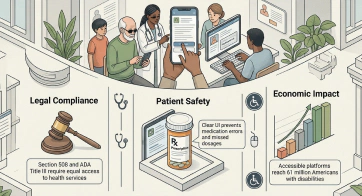
Digital accessibility in healthcare improves patient safety, trust, and outcomes—while reducing compliance risk. Here’s how providers can align with WCAG and build inclusive online care experiences.
Carrefour’s reported €10,000 penalty plus daily €500 fines shows how quickly accessibility gaps can become legal and financial risk. Here’s what organizations should fix first—and how to prove compliance.
Telecommunications companies serve everyone—so their digital channels must work for everyone. This guide explains practical WCAG steps for accessible telecom websites, apps, portals, and support flows.
Law firms serve everyone—so their websites, intake forms, and client portals must be accessible. This guide covers WCAG-aligned best practices, risk reduction, and a practical roadmap for legal teams.
Hospitals and clinics serve everyone—so their websites, patient portals, and digital forms must work for everyone. This guide explains WCAG-based accessibility priorities, common barriers, and a practical compliance roadmap.
For decades, the Americans with Disabilities Act (ADA) was primarily associated with the physical campus—the installation of ramps, widened doorways, and accessible restrooms. However, as the academic and administrative heart of higher education has migrated to the digital realm, the definition of "access" has fundamentally shifted.
For years, brands treated accessibility as something separate from growth. At Corpowid, we’ve seen the opposite: accessibility is growth. And today, that connection is more direct than ever.
Every year, the web gets a little more competitive — and a lot more complicated. By 2026, a website is no longer just a place where people learn about your brand. It’s your storefront, your communication hub, your accessibility gateway, and the very place search engines evaluate to decide whether you matter.
If you’ve ever wondered whether your website is truly accessible, the fastest way to find out is with a real audit—not guesswork, not assumptions. Before I dive into what an accessibility audit actually is and why it matters, let me start with something more practical.
In June 2025, a significant milestone was reached in Türkiye in the name of digital inclusion. The "Regulation on the Accessibility of Websites and Mobile Applications," published in the Official Gazette on June 21, 2025, aims to make the digital world more accessible for everyone.
Hey there, fellow digital adventurers! Are you ready to dive into the exciting world of digital accessibility and discover how it can turbocharge your business growth? Well, you're in the right place!
Corpowid has been recognized by Gartner, a leading global research and advisory firm, for our innovation and performance in digital accessibility. These badges reflect our commitment to creating inclusive, AI-powered web experiences.






 TR
TR