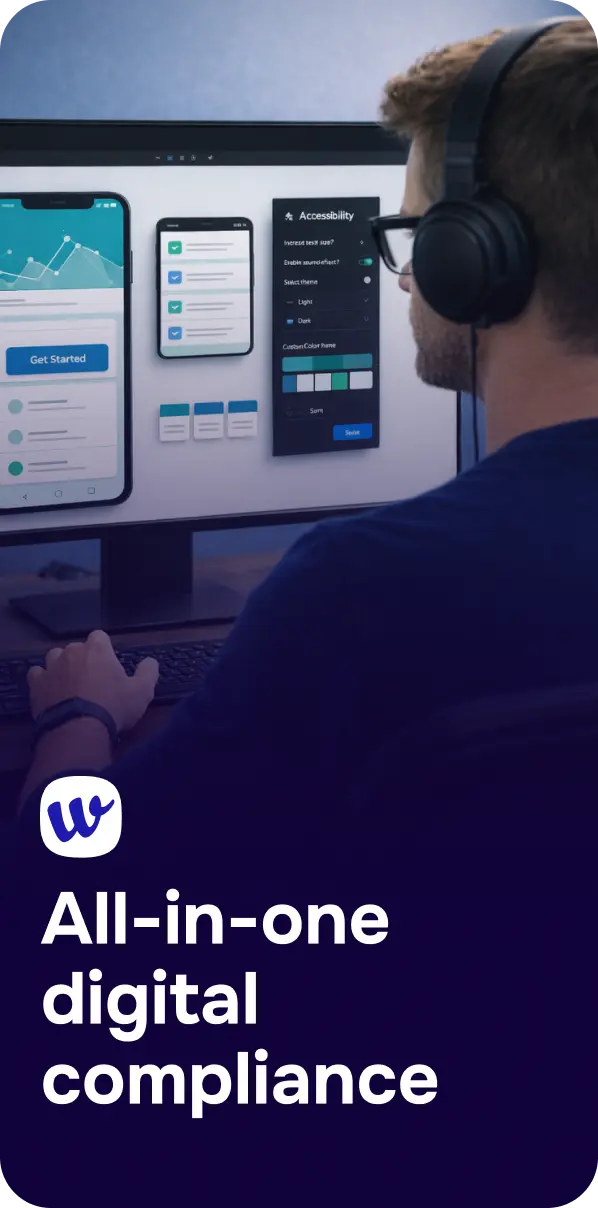
An AI accessibility audit gives compliance, privacy, and digital teams a faster way to identify accessibility issues across websites, apps, and digital experiences. Instead of relying only on occasional manual reviews, AI can scan at scale, flag common barriers, and help teams focus their time where it matters most.
For organizations working toward WCAG 2.2, ADA, EAA, or broader digital compliance goals, speed and consistency matter. Accessibility issues can appear after content updates, design changes, third-party script additions, and product releases. An AI-powered audit helps teams move from reactive checking to a more continuous and manageable process.
That does not mean AI replaces expert review in every situation. It means teams can detect a large set of issues earlier, organize remediation more efficiently, and support a stronger accessibility program over time.

An AI-powered accessibility audit is a technology-assisted review of digital properties that uses automation and machine intelligence to detect accessibility issues. Depending on the scope, it may be applied to websites, mobile apps, or even design files before development begins.
The goal is to uncover barriers that may affect people with disabilities, such as missing alternative text, poor heading structure, low color contrast, form labeling issues, keyboard navigation problems, or inconsistent semantic markup. AI can help identify patterns, classify issues, and surface findings quickly across many pages or screens.
For teams managing large or frequently updated digital estates, this approach can reduce the manual burden of initial discovery and make accessibility work easier to prioritize.
Many organizations struggle with accessibility because digital environments change constantly. Marketing teams publish new landing pages, product teams release interface updates, and third-party tools introduce new code. A one-time audit can be valuable, but it may not reflect the current state of the experience for long.
An AI-powered audit helps address that challenge by supporting:
This is especially useful for businesses that need to show progress, reduce risk, and maintain operational control over accessibility efforts.
While exact coverage depends on the platform and scope, an AI accessibility audit commonly reviews issues such as:
These checks help teams locate technical and content-related issues that can interfere with usability and compliance readiness.
Some issues appear repeatedly across websites and apps because they are tied to templates, shared components, or publishing habits. For example, one inaccessible form pattern may affect dozens of conversion pages. A single navigation issue may impact the entire site.
AI helps surface these repeated patterns quickly, which makes remediation more efficient. Instead of fixing isolated pages one by one, teams can address root causes in shared components and workflows.

AI and manual testing should be seen as complementary, not competing approaches.
An AI audit is strong at scale. It can review large volumes of content quickly, identify common issues, and support continuous monitoring. This makes it highly useful for day-to-day accessibility operations.
Manual testing is still important for evaluating real user experience, complex interactions, logical reading order, screen reader behavior, keyboard-only workflows, and issues that require human judgment. It is especially relevant when organizations need deeper validation for formal reporting or conformance documentation.
For many teams, the best approach is layered:
This combined model supports both operational efficiency and stronger compliance outcomes.
Accessibility compliance is not just about finding defects. It is about building a process that helps teams identify, fix, verify, and monitor barriers over time.
An AI-powered audit supports that process by giving teams earlier visibility into issues that may affect conformance efforts. It can help organizations prepare for internal reviews, guide remediation planning, and maintain awareness as content changes.
For businesses aligning with WCAG 2.2, ADA, EAA, Section 508, or procurement-related accessibility expectations, AI can improve readiness by making issue discovery more systematic and repeatable.
Organizations that also need formal documentation may pair audit findings with specialist review and reporting. For example, teams working toward VPAT or ACR documentation often benefit from combining automated detection with expert testing. Corpowid also provides VPAT and ACR services for organizations that need audit-backed conformance reporting.
Accessibility is not static. Even after a successful remediation effort, new issues can appear through redesigns, CMS edits, app releases, embedded tools, or changes in content workflows.
That is why many businesses move beyond one-time audits and adopt ongoing monitoring. Continuous AI monitoring can help teams:
This kind of always-on visibility is particularly valuable for organizations with multiple websites, frequent releases, or shared responsibility across legal, compliance, design, and engineering teams.
It also aligns with a broader shift toward automation in accessibility operations, as discussed in AI Agents Are Here: How Autonomous AI Will Quietly Take Over Your Accessibility To-Do List.

Not all tools support the same level of operational value. When evaluating an AI accessibility audit platform, businesses should look beyond basic scanning and consider how well the solution fits their compliance workflow.
Look for a platform that can support the environments your team manages, whether that includes websites, mobile apps, or design-stage assets.
A useful platform should help teams maintain visibility over time, not only generate a one-off issue list.
Findings should be organized in a way that helps teams understand severity, patterns, affected pages, and likely remediation paths.
The strongest solutions do more than identify problems. They help teams fix issues efficiently through automation, guided workflows, or integrated accessibility support.
Compliance teams often need exportable records, status visibility, and evidence of ongoing effort. Reporting features can make that process easier to manage internally.
Accessibility does not exist in isolation. For many businesses, it sits alongside privacy, cookie consent, legal documentation, and technical governance requirements. That is why teams increasingly look for connected compliance operations rather than disconnected tools.
An AI accessibility audit can be one important layer in that broader strategy. When accessibility monitoring is combined with privacy and legal compliance workflows, teams gain a clearer operational picture and reduce the friction of managing multiple obligations separately.
For example, organizations already reviewing website risk may also benefit from strengthening related controls such as consent and scanning processes. If that is part of your roadmap, this guide on how to run a cookie audit on your website is a practical next step.
Businesses looking for a more unified visitor-facing approach can also explore how a combined accessibility, consent, legal, and company information widget works.
An AI-powered audit is especially valuable when:
In these situations, AI helps create a more scalable accessibility process and supports better coordination between technical, compliance, and content teams.
An AI accessibility audit helps organizations move faster, see more, and manage accessibility with greater consistency. It is not a shortcut around accessibility work. It is a practical way to strengthen discovery, improve prioritization, and support continuous compliance readiness.
For businesses navigating WCAG 2.2, ADA, EAA, or internal digital governance requirements, AI can play a valuable role in making accessibility efforts more operational, more proactive, and easier to sustain over time.
Mobile checkout, login and sign-up journeys are some of the most important and failure-prone parts of any digital experience. This guide explains how to test them for accessibility, what issues to look for and how teams can build a more reliable compliance process.
Corpowid has been recognized by Gartner, a leading global research and advisory firm, for our innovation and performance in digital accessibility. These badges reflect our commitment to creating inclusive, AI-powered web experiences.


 TR