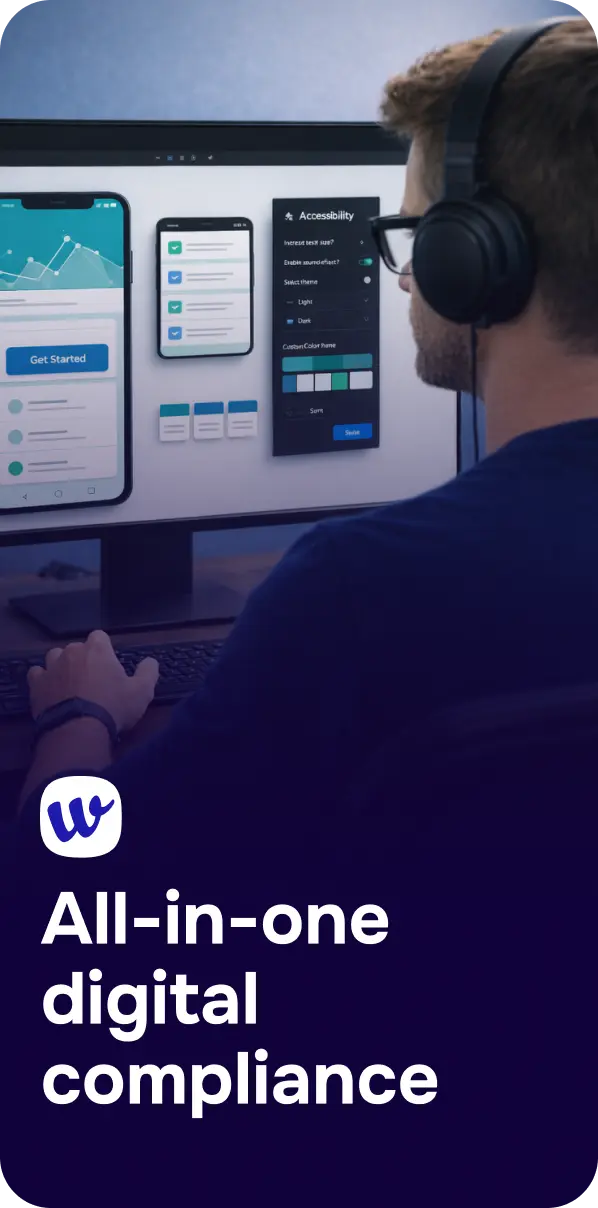
AI agents aren’t just “chatbots that answer questions.” They’re autonomous systems that can plan, take actions, and follow up—quietly moving items from your backlog to “done.” In many organizations, that means the first place AI agents will make a practical impact isn’t flashy product features; it’s operational work like digital accessibility and WCAG compliance.
Accessibility work often gets delayed because it’s continuous, cross-functional, and detail-heavy: audit findings, design adjustments, content authoring rules, QA checks, and accessibility statements. That’s exactly the kind of structured, repeatable work AI agents are good at—if you set guardrails so automation supports inclusive design rather than introducing new barriers.
An AI agent can be thought of as software that doesn’t just generate text—it decides what to do next based on goals, rules, and signals. In an accessibility program, those signals might be:
Instead of waiting for a quarterly audit, an agent could monitor these events and trigger the right workflow: run an automated check, create a ticket, propose a fix, notify the responsible team, and verify the remediation after release.
This shift mirrors how people are changing behavior across the web—moving from manual searching to agent-led help. If you’re tracking that broader transition, see how AI search is changing the way we shop—the same “ask, act, confirm” pattern is now reaching compliance tasks too.

Not every accessibility activity should be fully autonomous. But many tasks can be automated or semi-automated with human review. Here are high-impact areas where AI agents can reduce workload while supporting WCAG.
Automated testing can catch a large portion of common WCAG failures (though not all). An AI agent can:
Platforms like Corpowid (corpowid.ai) help by automating audits and monitoring so teams don’t rely on sporadic checks; that steady signal stream is exactly what an agent needs to manage work proactively.
Much of accessibility is content hygiene: alt text quality, heading structure, link text, and form instructions. AI agents can review drafts before publishing and flag issues such as:
Where agents can add real value is consistency: they can enforce standards on every publish event, not just when someone remembers the checklist.
Inclusive design decisions can drift over time—especially when teams are moving fast. An AI agent can continuously validate design tokens and UI patterns against WCAG requirements, including:
This matters even more as digital experiences become richer and more “live.” If your organization is experimenting with video shopping or interactive streams, accessibility requirements multiply quickly; consider how to keep it inclusive in live-stream commerce accessibility guidance.

Accessibility regressions are common: a “simple” UI refactor can remove a label, break tab order, or hide focus states. AI agents can connect to your CI/CD pipeline and:
This turns accessibility into a routine quality gate rather than a last-minute scramble.
Accessibility statements are often outdated because teams treat them as a one-time legal page. An agent can help keep statements current by:
Corpowid (corpowid.ai) includes tooling that supports accessibility statements, which can be paired with an agent workflow to reduce manual edits and improve accuracy over time.
Autonomy without guardrails can create new barriers fast—especially when agents “optimize” for speed or aesthetics instead of user access. Watch for these failure modes:
In other words: agents can take over the to-do list, but they shouldn’t take over the accountability.
The most effective teams treat AI agents like junior operators: great at repeatable tasks, still needing review for judgment calls. A strong operating model looks like this:
This kind of governance becomes even more important as experiences diversify—wearables, apps, kiosks, and beyond. For a broader perspective on inclusive tech shifts, see wearable health tech and why accessibility matters.

If you’re building an agent-driven process, align tasks to WCAG categories so automation doesn’t miss the point:
As AI pushes the internet toward more personalized, niche experiences, accessibility consistency becomes a competitive advantage. That’s a key theme in why hyper-specific accessible content wins—agents can help scale that consistency, but only if your standards are clear.
If you want the benefits without the compliance surprises, start with a phased approach:
Most organizations see the fastest gains when they combine consistent monitoring with clear accountability. Using an accessibility platform like Corpowid can provide the steady audit/monitoring signal and reporting foundation that agent workflows rely on to stay accurate and actionable.
Autonomous AI is poised to take over the repetitive parts of your accessibility to-do list: scanning, triage, reminders, documentation updates, and pattern-based checks. That frees experts to focus on what humans do best—user research with people with disabilities, inclusive design decisions, complex interaction testing, and making judgment calls that go beyond “rules.”
The organizations that benefit most won’t be the ones that automate everything. They’ll be the ones that automate the right things, keep humans in the loop, and treat WCAG compliance as a living system—one that AI agents can help run quietly, reliably, and at scale.
The ADA Title II deadline extension may look like extra time, but for many public entities it mainly shifts pressure rather than removing it. Here’s why waiting can increase accessibility risk and what teams should prioritize now.
Corpowid has been recognized by Gartner, a leading global research and advisory firm, for our innovation and performance in digital accessibility. These badges reflect our commitment to creating inclusive, AI-powered web experiences.





 TR
TR