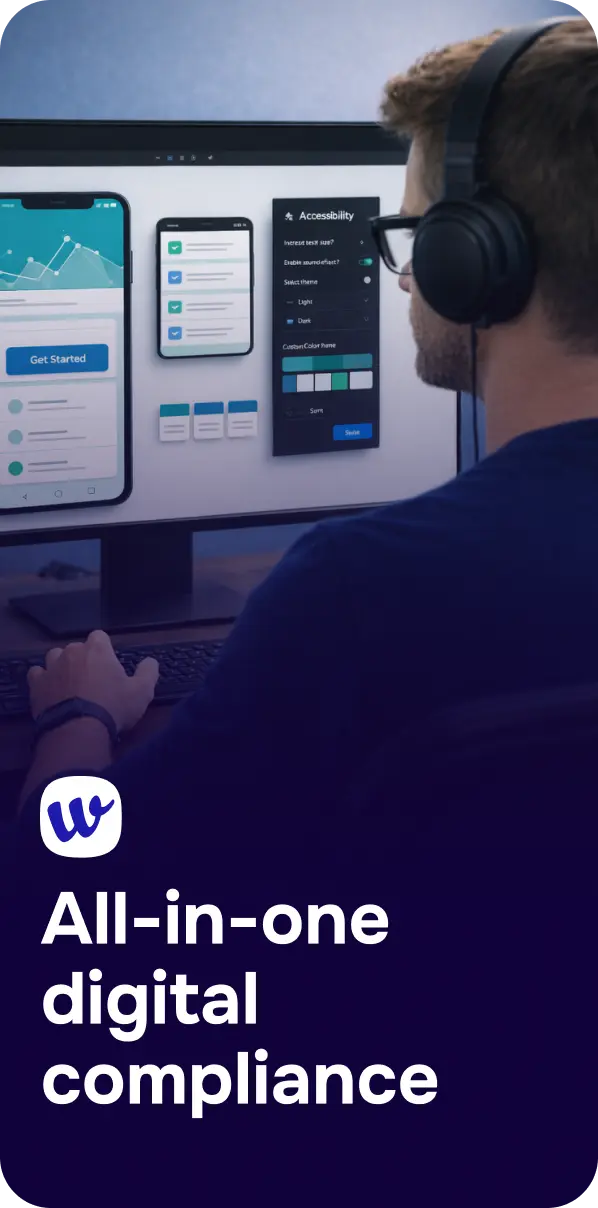
The European Accessibility Act (EAA) and Germany’s Barrierefreiheitsstärkungsgesetz (BFSG) are reshaping what “good digital experience” means across the EU. For many organizations, these laws turn accessibility from a best practice into a compliance requirement—especially for customer-facing websites, apps, and digital services.
This article explains what the EAA and BFSG are, how they connect to WCAG, what they typically cover in practice, and how to start closing accessibility gaps with a realistic plan.
The EAA is an EU directive designed to improve accessibility of key products and services across the single market. Its goal is straightforward: remove barriers so people with disabilities can access essential services more consistently—regardless of country or vendor.
Because it’s a directive, each EU member state implements it through national law. That’s where timelines, enforcement approaches, and specific wording may differ—but the core accessibility expectations remain aligned.
The EAA is especially relevant if you provide digital services to consumers in the EU. That can include businesses headquartered outside the EU if they sell into EU markets. While details vary by country, the EAA commonly impacts organizations offering services like:
In practice, if your website or app is a primary route to purchase, register, manage an account, or access information, it’s a high-priority area for accessibility compliance.
The BFSG is Germany’s national law implementing the EAA requirements. If you offer covered products or services to consumers in Germany, the BFSG matters—even if your company is not based in Germany.
While the legal details should be confirmed with counsel, the operational takeaway for digital teams is clear: German market-facing digital experiences (websites, mobile apps, customer portals, checkout flows, account management, support journeys) should be accessible and demonstrably maintained over time.
BFSG compliance is won or lost in everyday design and engineering decisions: color contrast, keyboard navigation, focus states, form labels, error prevention, captioning, PDF accessibility, and the quality of alternative text—plus the governance to keep it all working after each release.
Many organizations are working toward EAA-related obligations taking effect in 2025, with BFSG aligning to that timeframe in Germany. Even if your exact obligations depend on your services and size, waiting until the last minute is risky because accessibility fixes often require design changes, development time, and regression testing.
In real-world terms, “compliance” usually means:

WCAG (Web Content Accessibility Guidelines) is the most widely used technical benchmark for web accessibility. EAA/BFSG don’t just ask for “accessible”; they push organizations toward measurable outcomes, which is why WCAG success criteria become the practical checklist for teams.
Inclusive design complements WCAG by ensuring accessibility is integrated upstream, reducing costly rework later. Instead of patching barriers at the end, inclusive design asks questions early: Can someone complete this flow with only a keyboard? What if they use voice input? What if they need larger text or high contrast? Are errors understandable and recoverable?
The fastest path to readiness is to prioritize customer impact and legal exposure: address critical journeys first, then expand coverage across the broader site/app.
List your digital touchpoints (marketing site, web app, mobile apps, PDFs, help center, embedded third-party widgets). Then map the journeys that matter most: purchase, onboarding, account management, billing, support. Industries with complex funnels—like property search platforms—often find issues concentrated in filtering, maps, and multi-step forms (see digital accessibility for real estate platforms for examples).
Automated testing catches many detectable issues quickly (missing alt attributes, contrast failures, form input problems), but it can’t validate everything (meaningful alt text, logical tab order, understandable error messages). Combine automated scans with manual keyboard testing and assistive technology checks.
Platforms like Corpowid (corpowid.ai) can help teams run automated accessibility audits and ongoing monitoring, so regressions are caught early and reported consistently across pages and releases.

Accessibility becomes manageable when shared UI components are accessible by default. Prioritize buttons, inputs, navigation, modal dialogs, date pickers, and alerts. If you operate across multiple markets, consistent component standards are especially important—public-sector experiences show how inclusive governance improves outcomes (see why governments must ensure digital transformation is inclusive).
An accessibility statement is both a transparency tool and a process signal. It should describe your conformance target, known limitations, contact channels, and update cadence. If you’re implementing EAA/BFSG requirements, the statement should reflect how users can request accessible alternatives and how feedback is handled.
Overlays/widgets can support certain user preferences, but they do not replace fixing underlying code issues. A keyboard trap, missing label, or broken focus order remains a barrier. If you’re weighing this approach, it helps to understand the limitations described in why accessibility overlays are not enough. Use tools strategically, but prioritize true remediation.
EAA/BFSG impact varies by offering, but the compliance pattern is similar: any industry with high-volume consumer journeys needs reliable accessibility at scale.
The hardest part isn’t reaching an accessibility target once—it’s keeping it through continuous content updates, design refreshes, A/B tests, and third-party integrations. Sustainable compliance usually includes:
Corpowid (corpowid.ai) can support this “always-on” approach by monitoring accessibility issues over time and helping teams track progress as pages and components evolve.
If the EAA and BFSG apply to your organization, start by defining scope, auditing your highest-value journeys, and aligning remediation work to WCAG. Treat accessibility as a product quality discipline—not a one-off compliance sprint—and you’ll be better positioned to meet legal expectations while delivering a smoother experience for everyone.
Corpowid has been recognized by Gartner, a leading global research and advisory firm, for our innovation and performance in digital accessibility. These badges reflect our commitment to creating inclusive, AI-powered web experiences.








 TR
TR