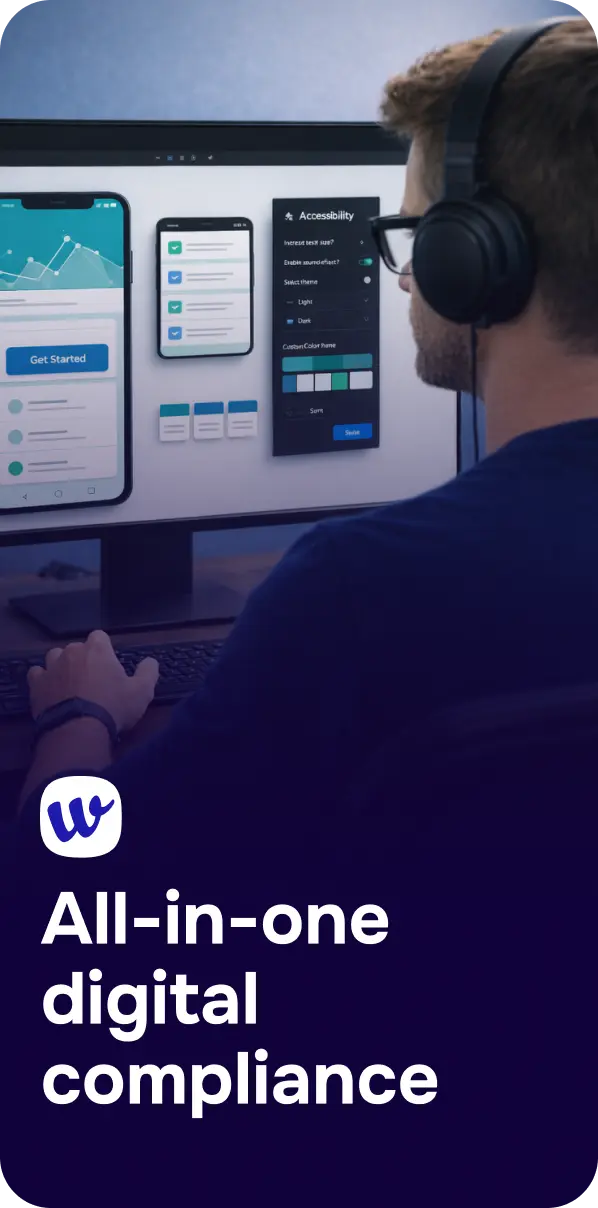
In 2026, “going viral” is less predictable and less profitable than it looks. Search is fragmented across AI answers, social discovery, community platforms, and long-tail queries that sound like real questions: “best budgeting app for dyslexia,” “WCAG keyboard shortcuts for data tables,” “captioning for fitness micro-courses.” The internet is rewarding creators and brands that build hyper-specific content for well-defined needs.
But there’s a catch: niche content only wins if the people who need it can actually use it. That’s where digital accessibility, WCAG compliance, and inclusive design stop being “nice-to-have” and start becoming the differentiator that turns a small audience into a loyal one.
Hyper-specific content wins because it maps to intent. AI-driven search surfaces answers that match a user’s context, constraints, and preferences—often with fewer clicks and less tolerance for vague content. This is also why accessibility can’t be bolted on at the end; if your niche page fails basic usability for keyboard users or screen reader users, the experience collapses fast.
We’ve already seen how AI changes discovery and purchasing behavior; the same shift applies to educational and support content. If you’re exploring this broader trend, How AI Search Is Changing the Way We Shop (and Why Accessibility Can’t Be an Afterthought) offers a useful lens on how visibility and accessibility now move together.
In accessibility-focused niches, “micro-audiences” might be:
These groups are not edge cases. When your content is designed for their real tasks and preferences, it often becomes better for everyone—more scannable, more understandable, more trustworthy.
Niche content is often long-tail and high-intent—exactly the kind of content users seek when they’re ready to act. But accessibility barriers can prevent completion even when users find you.

WCAG-aligned content tends to be easier to parse, navigate, and summarize, both for humans and for machines. While accessibility is not a direct “ranking factor” in a simple checkbox way, the behaviors it supports—lower bounce, longer engagement, fewer rage clicks, more successful conversions—are the outcomes search systems and AI assistants learn from.
Hyper-specific topics amplify this effect because the audience is less forgiving: if someone searches for “how to file an accessible insurance claim with keyboard only,” they’re likely doing it because they need keyboard support. If your instructions rely on “click the green button on the right,” you’ve lost them.
Great niche content often becomes a step-by-step guide, template, checklist, or troubleshooting flow. Inclusive design ensures that workflow works across input methods and assistive tech:
H1, logical H2/H3 hierarchy, descriptive headings, and consistent section order.To win in 2026, treat content like a product: research a narrow need, design the experience, and verify it works for diverse users. Here’s a practical approach.
Traditional keyword research looks for volume. Niche content research looks for constraints. Combine a core topic with an accessibility context, such as:
These phrases signal high intent and naturally guide you toward inclusive scenarios instead of generic advice.
Niche winners are task-complete pages: “Do the thing, end-to-end.” Use:
This aligns with how modern users conserve attention—especially in an uncertain economy where people want efficient outcomes. The broader mindset is echoed in The Resourceful Consumer: Smart Spending Habits for an Uncertain Economy (Without Leaving Accessibility Behind), which highlights why practical, low-friction experiences matter.

Skimmability is an accessibility feature. Use short paragraphs, descriptive headings, and bulleted lists—but keep them meaningful. A “wall of bullets” can be as overwhelming as a wall of text. Pair scannable layout with:
Also, respect attention fatigue. If your niche content requires deep focus, consider “read later” friendly formatting and accessible dark mode support. For a complementary perspective, see Always Online, Always Tired: Realistic Digital Detox Strategies That Actually Stick (Without Breaking Accessibility).
In 2026, audiences expect transparency. An accessibility statement that reflects what you’ve tested, what you’re improving, and how users can report issues builds credibility—especially when your content targets a specific access need.
Operationally, niche content scales quickly: dozens of guides, templates, and landing pages. That’s where platforms like Corpowid (corpowid.ai) can help by running automated accessibility audits and monitoring so issues like missing alt text, contrast regressions, or broken form labels don’t quietly accumulate as you publish.

If you want to apply the “hyper-specific” principle to accessibility, here are content angles that tend to perform well:
Hyper-specific content is “small” only in volume; in value, it’s massive. When you combine niche intent with WCAG-aligned accessibility, you don’t just attract the right users—you help them succeed. That success becomes your growth loop: better engagement signals, more shares in communities, fewer support requests, and a reputation for doing the details right.
If you’re building a content engine around niche workflows, make accessibility part of the publishing system, not a last-minute review. Tools like Corpowid (corpowid.ai) can support that system with ongoing audits, monitoring, and statement tooling—so your most specific, high-intent pages remain usable for the people they’re meant to serve.
In 2026, “big” is built by being specific—and being accessible.
The ADA Title II deadline extension may look like extra time, but for many public entities it mainly shifts pressure rather than removing it. Here’s why waiting can increase accessibility risk and what teams should prioritize now.
Corpowid has been recognized by Gartner, a leading global research and advisory firm, for our innovation and performance in digital accessibility. These badges reflect our commitment to creating inclusive, AI-powered web experiences.






 TR
TR