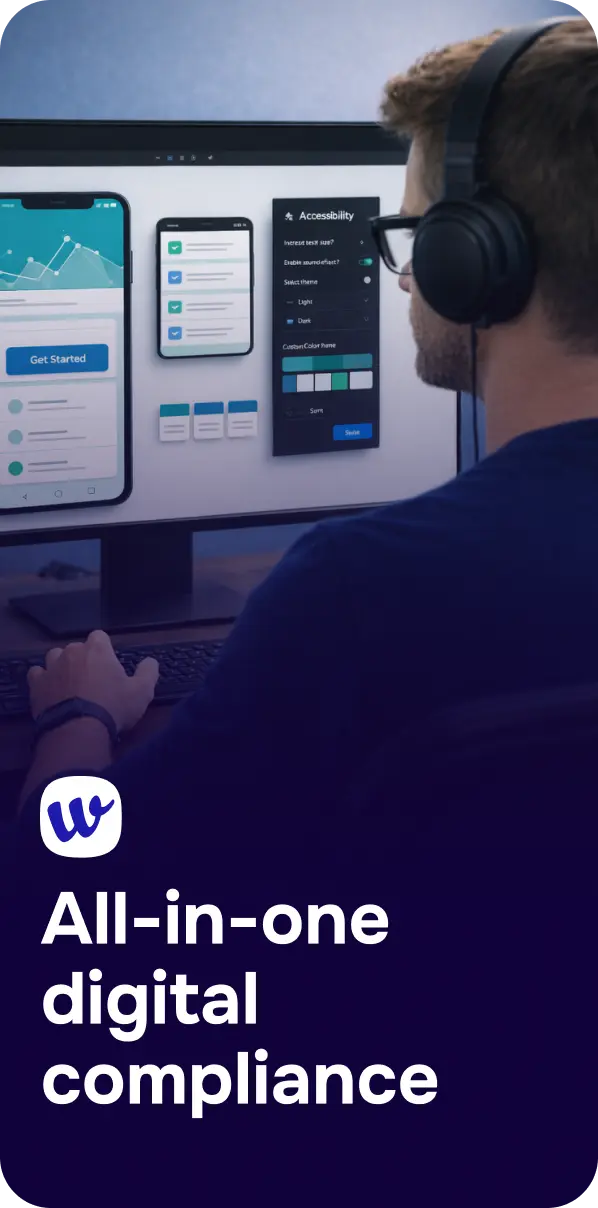
If you want to understand how accessible your website really is, you need to look at it the way users do on real pages. That is where an accessibility chrome extension becomes especially useful. Instead of treating accessibility as a separate audit task that only happens occasionally, browser-based testing lets designers, developers, marketers, and compliance teams review issues directly in the live experience.
Corpowid provides a Chrome extension that helps teams identify and fix accessibility barriers in the browser. It fits into a broader accessibility workflow that can also include AI audits, continuous monitoring, automated remediation, mobile app accessibility support, and design-stage checks in Figma. For teams trying to reduce compliance risk while improving usability, that kind of direct browser visibility can make accessibility work much easier to act on.

Many accessibility issues are easiest to understand when you see them on the actual page a visitor is using. A browser extension shortens the distance between finding a problem and understanding its impact.
That matters because accessibility work is rarely just about checking boxes. A missing alt attribute, weak heading structure, poor keyboard behavior, or confusing interactive element affects how a person navigates, understands, and completes tasks on your site. Reviewing those barriers in the browser gives teams more context than a disconnected report alone.
When testing happens in the browser, teams do not have to leave their normal environment to start reviewing pages. That can make accessibility easier to include during content updates, QA, design reviews, and pre-launch checks.
Corpowid’s site evidence highlights that its Chrome extension tests real pages in the browser. That is important for organizations that need to evaluate what users actually encounter, not just what exists in a design file or a limited development snapshot.
Finding problems where they appear makes prioritization easier. Teams can connect the issue to the exact page, component, or flow that needs attention, then decide what can be fixed immediately and what should move into a broader remediation plan.
A useful extension helps teams notice barriers that are often missed in routine visual review. While no single tool replaces a full accessibility program, browser-based testing is a practical way to catch issues earlier and more often.
Accessibility problems often begin with structure. Pages may look visually polished while still being difficult to navigate with assistive technology. Testing in the browser can help teams review whether content is organized in a way that supports understanding and navigation.
This is especially valuable for content-heavy pages, product pages, forms, and navigation elements that change frequently.
Buttons, links, menus, popups, forms, and other interactive components are common sources of accessibility friction. Browser-based review helps teams inspect the actual behavior of these elements in context, which is essential when accessibility issues affect conversion paths or key customer journeys.
Accessibility is not fixed once and forgotten. New content, scripts, widgets, tags, and design changes can introduce fresh barriers over time. That is one reason Corpowid positions accessibility as a continuous process supported by monitoring, scanning, fixing, and reporting.
For teams that also manage privacy and consent, this same mindset applies across digital compliance. A site changes constantly, so controls need to keep up. If your team is already reviewing site changes for privacy impact, it can help to align that process with accessibility checks as well. For example, cookie-related changes can be reviewed alongside accessibility updates as part of a broader release workflow. See How to Run a Cookie Audit on Your Website in 5 Steps.

A browser extension is most effective when it is part of a larger system, not the whole system by itself. Corpowid’s platform evidence shows that its Chrome extension sits alongside other accessibility tools that support design, testing, monitoring, remediation, and reporting.
Corpowid also offers a Figma accessibility plugin that flags issues at the design stage. That means teams can begin catching accessibility barriers before development, then use the Chrome extension to review how those decisions appear on real pages later in the workflow.
Before a new page, feature, or campaign goes live, browser-based testing can help verify that obvious accessibility barriers are not slipping into production. This is useful for teams that move quickly and need practical checks inside their release process.
Corpowid’s platform continuously monitors websites and mobile apps for accessibility issues and reports findings from a single dashboard. In that setup, the extension can support hands-on investigation while continuous monitoring helps catch issues at scale.
Corpowid also states that its AI fixes accessibility issues it can detect on websites and apps. In practice, that means teams can combine direct browser inspection with automated remediation and then focus human effort where judgment is still required.
This shift toward continuous, AI-supported accessibility operations is part of a broader change in how teams handle compliance work. If that approach is relevant to your organization, you may also want to read AI Agents Are Here: How Autonomous AI Will Quietly Take Over Your Accessibility To-Do List.
Browser testing is valuable, but it should not be treated as the only evidence you need. Accessibility requires a mix of methods.
Corpowid’s VPAT and ACR service page makes this point clearly: automated tools provide coverage, but defensible conformance claims require specialist manual testing, including screen readers and keyboard-only navigation. That is especially important when procurement, audits, or formal accessibility documentation are involved.
Even strong page-level testing does not solve governance on its own. Organizations still need ongoing monitoring, clear ownership, reporting, and up-to-date legal and accessibility documentation.
If a buyer asks for an accessibility conformance report, a browser extension is not the deliverable. In that case, teams may need audit-backed VPAT 2.5 and ACR documentation supported by manual testing and criterion-level remarks.
Browser-based accessibility testing is useful across several teams because accessibility issues rarely belong to only one department.
They can compare intended experience with what appears on live pages and catch issues that may have emerged during implementation.
They can inspect components in context, review problem areas quickly, and validate fixes directly in the browser.
They can review landing pages, campaign pages, and content updates without waiting for a full audit cycle.
They gain a practical way to validate that accessibility work is happening on real user-facing pages, not only in policy documents or one-time reports.

Accessibility testing in the browser is not only about improving user experience. It also supports a more defensible compliance posture.
Corpowid’s platform is built around ongoing accessibility, cookie consent, and legal compliance management. In that context, the Chrome extension is useful because it helps teams connect technical accessibility work to the actual digital experience visitors receive. That creates a stronger operational loop: find issues, understand them in context, fix what you can, monitor what changes, and keep evidence ready when stakeholders ask.
For organizations trying to simplify digital compliance, this is often more effective than managing accessibility, consent, and legal updates as separate projects. Corpowid’s unified approach is also reflected in its 4-in-1 widget, which combines several visitor-facing compliance functions in one script. You can learn more here: Inside the 4-in-1 Widget: Accessibility, Consent, Legal and Company Info in One Script.
If your team wants to understand how users with disabilities may experience your site, starting in the browser is a practical move. A strong accessibility chrome extension helps you inspect real pages, identify barriers earlier, and make accessibility part of normal digital operations instead of a last-minute task.
For many organizations, the best approach is layered: catch issues in design, test live pages in the browser, monitor continuously, automate what can be fixed, and use manual testing when formal conformance evidence is needed. That is the kind of workflow Corpowid is built to support across websites, mobile apps, consent management, legal documents, and compliance reporting.
An accessibility Chrome extension is a browser tool that helps teams inspect live web pages for accessibility barriers directly in Chrome. It can make it easier to review issues in context instead of relying only on separate reports.
No. Browser-based testing is helpful, but it does not replace a full accessibility program. Corpowid’s VPAT and ACR service information notes that defensible conformance claims require manual testing with methods such as screen readers and keyboard-only navigation.
It can help designers, developers, QA teams, marketers, content owners, and compliance teams. Because accessibility issues affect live user journeys, browser-based review is useful across multiple roles.
It supports in-browser accessibility testing on real pages and works alongside Corpowid’s broader tools for AI accessibility audits, continuous monitoring, automated remediation, Figma-stage checks, mobile app accessibility support, and compliance reporting.
No. A browser extension can support issue discovery and review, but VPAT 2.5 and ACR documentation require broader evaluation. Corpowid states that its conformance reports are audit-backed and supported by specialist manual testing.
Managing accessibility, cookie consent and legal compliance through separate tools often creates gaps, duplicated work and more operational risk. Here’s why an all in one compliance platform can be the smarter approach.
Corpowid has been recognized by Gartner, a leading global research and advisory firm, for our innovation and performance in digital accessibility. These badges reflect our commitment to creating inclusive, AI-powered web experiences.



 TR
TR