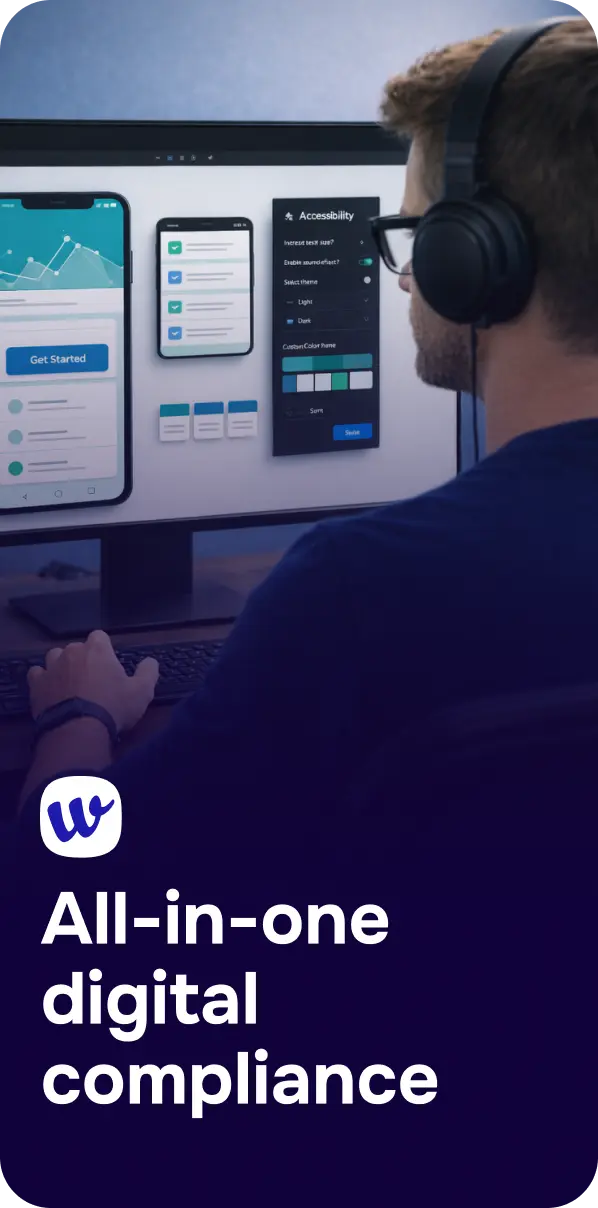
For many organizations, digital compliance has grown tool by tool. One vendor handles accessibility. Another manages cookie consent. A third covers legal notices or privacy workflows. On paper, that setup can seem manageable. In practice, it often creates fragmented ownership, inconsistent user experiences, and more room for compliance gaps.
That is why more digital, privacy and compliance teams are rethinking the multi-vendor model. Instead of stitching together separate systems, they are looking for an all in one compliance platform that brings accessibility, cookie consent and legal compliance into a single operational layer.
The case for consolidation is not just about convenience. It is about reducing complexity, improving accountability, and making it easier to stay aligned as requirements evolve.

Using specialized tools for different obligations may sound like a best-of-breed strategy, but it frequently introduces operational friction. Each vendor has its own dashboard, implementation method, support process and update cycle. Internal teams then have to coordinate across all of them.
That can create challenges such as:
When responsibilities are split across vendors, it also becomes harder to answer a basic internal question: who owns digital compliance end to end?
An all in one approach helps replace fragmented processes with a unified workflow.
An all in one compliance platform is more than a bundle of separate features sold together. It should function as one coordinated system for the obligations that affect your website and digital properties.
In Corpowid’s positioning, that means unifying accessibility, cookie consent and legal compliance in one AI platform, with one interface visitors see and one engine teams manage behind the scenes.
That distinction matters. Consolidation only works when the platform is designed to connect the work operationally, not just place unrelated tools under the same contract.
A truly consolidated setup should support:
If you want a closer look at how this model comes together on the front end, see Inside the 4-in-1 Widget: Accessibility, Consent, Legal and Company Info in One Script.

The strongest argument for moving away from three separate vendors is not simply vendor reduction. It is the operational and compliance value that comes from centralization.
Every additional vendor adds another dependency. There are more contracts, more implementation requirements, more release schedules and more handoffs between teams. That complexity can make even routine updates harder to manage.
With one platform, teams can reduce the number of disconnected processes they need to maintain. That creates a cleaner path from detection to action.
When websites rely on multiple compliance vendors, technical teams often have to manage several scripts, tags or embeds. That can complicate deployment and troubleshooting, especially across large or fast-changing websites.
A one-script model helps centralize implementation and can make it easier to maintain consistency across properties and environments.
Accessibility, privacy and legal requirements often involve different stakeholders, but the digital experience is still one experience for the visitor. A consolidated platform gives teams a shared system to work from, which can reduce confusion around ownership and status.
Instead of separate teams checking separate dashboards, stakeholders can align around one source of truth.
Compliance is not a one-time project. Websites change constantly. New pages go live, cookies are added, designs shift and regulations evolve. Static point-in-time tools can leave teams exposed between reviews.
Corpowid positions its platform around audit, fix and monitor workflows with automatic updates as regulations change. That kind of always-on model is especially valuable for organizations that need continuity rather than periodic checks.
For a related perspective on automation in accessibility operations, read AI Agents Are Here: How Autonomous AI Will Quietly Take Over Your Accessibility To-Do List.
The value of an all in one compliance platform becomes clearer when you look at how connected these obligations are in day-to-day operations.
Accessibility work is often treated as separate from privacy or legal compliance, but in reality it affects the same digital properties, user journeys and governance models. A unified platform can help teams address accessibility as part of a broader compliance lifecycle instead of as an isolated workstream.
This is particularly relevant for organizations preparing for requirements tied to WCAG 2.2, ADA or EAA readiness.
Cookie consent is another area where fragmentation creates risk. If consent controls, cookie scanning and legal disclosures live in separate systems, it becomes harder to maintain consistency and prove internal control.
A connected platform can support a more coherent privacy experience for users while reducing administrative overhead for teams.
If your organization is currently reviewing its privacy setup, this guide may help: How to Run a Cookie Audit on Your Website in 5 Steps.
Legal compliance on websites is often overlooked until a new market, requirement or review forces action. When legal notices, company information and related disclosures are managed separately from accessibility and privacy tooling, updates can be slow and inconsistent.
Consolidation helps bring those requirements into the same operational framework, making transparency easier to maintain over time.
Not every organization needs to change vendors immediately. But there are clear signals that your current model may be creating unnecessary friction.
If several of these sound familiar, consolidation may be less about replacing tools and more about improving governance.

Not all platforms that claim to be unified are equally integrated. When evaluating options, focus on how the platform supports real operational alignment.
Ask whether accessibility, cookie consent and legal compliance are managed through one coordinated system or simply sold as adjacent modules.
Digital compliance changes over time. A strong platform should help your team move beyond one-time setup and into ongoing oversight.
The front-end experience should feel coherent. If users encounter different interfaces or inconsistent messaging across compliance functions, consolidation benefits may be limited.
The right platform should make collaboration easier for compliance, privacy, legal and digital teams. One of the biggest benefits of consolidation is better cross-functional execution.
Corpowid’s website highlights readiness around WCAG 2.2, ADA, EAA and GDPR. For many organizations, that combination reflects the practical overlap between accessibility, privacy and legal obligations on digital properties.
Choosing one platform instead of three vendors is not only a procurement decision. It is a control decision.
When compliance operations are fragmented, teams spend more time coordinating systems and less time improving outcomes. When those functions are unified, it becomes easier to standardize implementation, monitor changes, and maintain a consistent experience for both users and internal stakeholders.
For businesses that need accessibility, cookie consent and legal compliance to work together, an all in one compliance platform offers a more scalable model than managing separate vendors in parallel.
That is the real case for consolidation: fewer gaps, clearer ownership and a more resilient path to ongoing digital compliance.
It depends on your operational needs, but a consolidated platform can be a better fit when your team wants one workflow for accessibility, cookie consent and legal compliance instead of managing separate tools and handoffs.
Common risks include duplicated work, inconsistent user experiences, unclear ownership, multiple scripts on the website and gaps between audits, remediation and ongoing monitoring.
In a unified platform model, one script can support multiple visitor-facing compliance functions when the system is designed to connect them operationally rather than treat them as separate add-ons.
Organizations with cross-functional digital, privacy, legal and compliance teams often benefit most, especially when they manage multiple obligations across the same websites or digital properties.
Managing alt text manually across large websites is difficult for lean digital teams. This guide explains how an automatic alt text generator can help scale image descriptions, where automation fits, and what teams should still review.
Corpowid has been recognized by Gartner, a leading global research and advisory firm, for our innovation and performance in digital accessibility. These badges reflect our commitment to creating inclusive, AI-powered web experiences.




 TR
TR