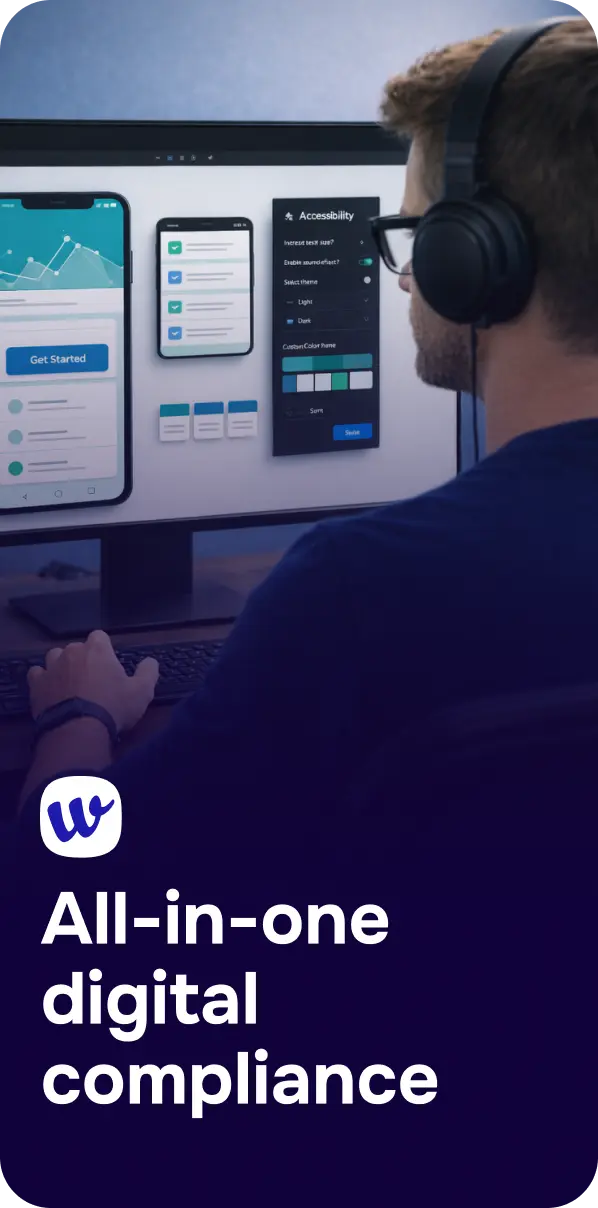
Searching for a “free ADA audit” usually happens for one of two reasons: you want to make your website usable for everyone, or you’re worried about legal exposure. In reality, both goals are connected. The Americans with Disabilities Act (ADA) doesn’t list technical web requirements, but enforcement and lawsuits frequently point to WCAG (Web Content Accessibility Guidelines) as the practical benchmark for whether a site provides equal access.
A free audit can be a helpful starting point—especially for identifying obvious barriers like missing alt text or low color contrast. But it’s important to understand what “free” audits can and can’t tell you, and how to turn results into an actionable remediation plan.
A “free ADA audit” is typically one of these:
These options can be valuable—especially when you’re trying to estimate effort and prioritize fixes—but they’re not the same as a complete ADA/WCAG conformance evaluation.
Most free audits focus on machine-detectable issues tied to common WCAG failures. Typical checks include:
Fixing these items improves usability for people using screen readers, magnification, speech input, alternative keyboards, and more. And because these problems are visible in automated reports, they’re also frequently referenced in demand letters and complaints.

The most important thing to know: automation can’t fully determine accessibility. Depending on the site, automated tools may catch only a portion of WCAG success criteria (often cited as around 20–40% of issues, though it varies).
Many severe barriers happen when someone can’t use a mouse. Free scans may not tell you if:
A tool can detect a missing label, but not whether the label makes sense. For example, “Button” or “Submit” repeated across the site isn’t a good experience. True quality requires manual testing with assistive technologies.
Multimedia compliance is often overlooked. Captions and transcripts are essential for users who are deaf or hard of hearing, and audio description supports many blind users. The history of legal enforcement around captions is well established—see Netflix and Closed Captions: A Landmark Accessibility Settlement for why video accessibility remains a major risk area.
Carousels, custom dropdowns, date pickers, live chat widgets, and single-page apps can “look fine” but fail when announced by a screen reader or navigated by keyboard. ARIA roles, states, and properties must match actual behavior—something free scans won’t reliably validate.
Used correctly, a free audit is a smart first step. Here’s a practical approach.
Many sites have accessible marketing pages but inaccessible checkout, claims forms, or account areas. Pick representative templates:
Even without deep expertise, you can uncover major blockers by:
Not all issues are equal. Prioritize:

If your goal is meaningful compliance—not just a score—you need a repeatable process.
Free reports sometimes label issues vaguely. Translate them into WCAG success criteria, and note:
If you’re preparing formal documentation for customers or procurement, you’ll want to understand the effort involved. This ties closely to VPAT work; see VPAT Cost: What It Really Takes to Document Accessibility Compliance for how testing and documentation time add up.
Accessibility is easier when solved in design systems and shared components. For example, fix your button, modal, and form-field components once—then the improvement flows to every page that uses them.
Accessibility isn’t a one-time project. New content, new marketing tags, A/B tests, and CMS updates can reintroduce issues. A platform like Corpowid (corpowid.ai) can help by running automated audits and ongoing monitoring across your site, so you catch problems early and track improvements over time.
Many teams look for a quick patch after seeing audit results. Overlays and widgets can help with some usability preferences (like text size controls), but they don’t replace remediation of underlying code issues—and they don’t guarantee WCAG compliance or legal protection. If you’re evaluating this route, read Free Accessibility Widget: What It Can (and Can’t) Do for WCAG Compliance to understand realistic outcomes.
Some organizations still choose to pair a widget with remediation and monitoring. For example, Corpowid includes an overlay/widget alongside auditing and statement tools, which can be useful when it’s part of a broader accessibility program rather than a substitute for fixes.
If you’re in a sector like insurance, accessibility impacts core customer tasks—getting quotes, logging in, submitting claims, viewing policy documents. These flows often involve complex forms and portals where automated free audits underreport real barriers. If that sounds like your environment, Digital Accessibility for Insurance Companies: A Practical WCAG Compliance Guide offers focused guidance on what to prioritize.
Consider a more comprehensive evaluation (manual testing + user flows + assistive tech checks) if:
Modern workflows increasingly combine automation and human review. If you’re exploring AI-assisted documentation and testing, How AI Is Changing VPAT Creation—and Where Human Review Still Matters explains where automation accelerates work and where expert validation remains essential.

A free ADA audit is a solid entry point, but it’s most valuable when it’s treated as the beginning of an accessibility program—not the finish line. Combine automation with targeted manual testing, prioritize high-impact fixes, and build accessibility into your ongoing release cycle to move steadily toward WCAG conformance and a more inclusive web.
Small accessibility issues on product and checkout pages can create major friction for shoppers and compliance risk for businesses. Here are the e-commerce accessibility UX fixes that deserve attention first.
Choosing between an accessible HTML report and a tagged PDF affects usability, accessibility, maintenance, and compliance readiness. Here’s how to decide which format to publish and when a dual-format approach may be the better option.
Corpowid has been recognized by Gartner, a leading global research and advisory firm, for our innovation and performance in digital accessibility. These badges reflect our commitment to creating inclusive, AI-powered web experiences.



 TR
TR