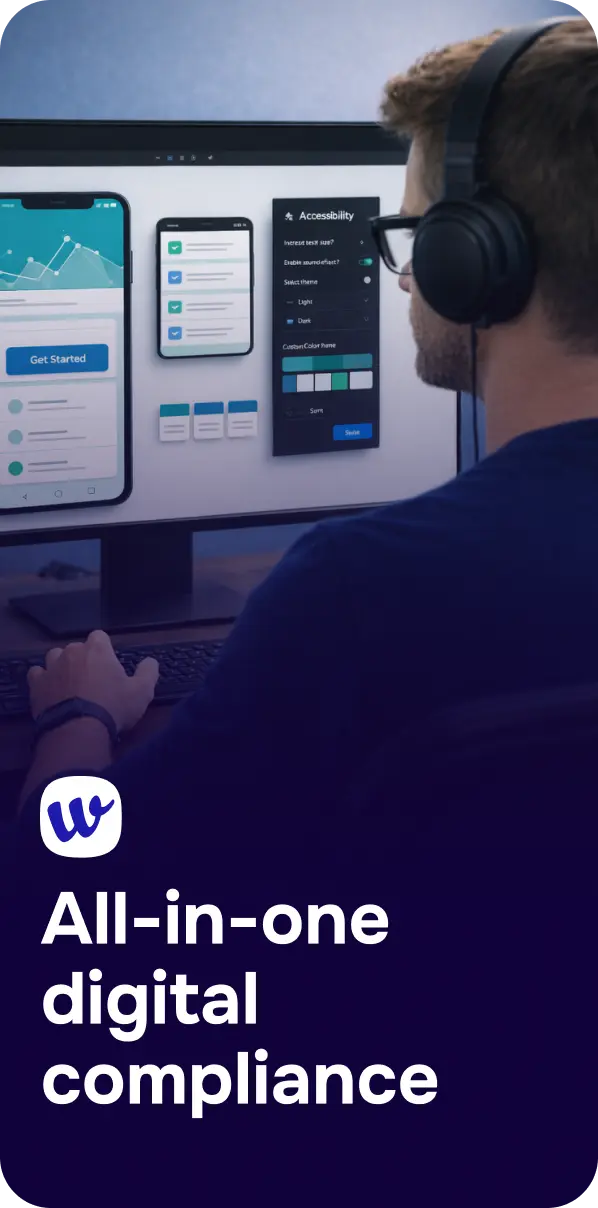
ADA website compliance is no longer something businesses can treat as a side project or a one-time website update. In 2026, US organizations are expected to take digital accessibility seriously as part of their broader compliance, privacy, and website governance strategy.
For most teams, the challenge is not understanding that accessibility matters. The real challenge is knowing what practical steps to take, how to prioritize them, and how to maintain compliance as websites, content, and regulations continue to change.
This page explains what ADA website compliance means in practical terms, what businesses should focus on now, and how to build a sustainable process instead of relying on reactive fixes.

ADA website compliance generally refers to making digital experiences accessible to people with disabilities and aligning your website with recognized accessibility standards and expectations. For businesses, this usually means reviewing how users interact with your site, identifying barriers, fixing issues, and monitoring accessibility over time.
It is important to understand that website accessibility is not limited to the homepage or a few high-traffic pages. It applies across the user journey, including navigation, forms, product pages, support content, legal notices, and any interactive elements visitors rely on.
In practice, ADA website compliance often overlaps with broader accessibility work tied to standards such as WCAG 2.2, as well as internal governance, design systems, and content publishing workflows.
In 2026, digital experiences are central to how businesses communicate, sell, support customers, and deliver services. That means accessibility risk is also digital risk. If a website creates barriers for users, the issue is not only technical. It can affect customer trust, user experience, operational continuity, and compliance readiness.
For compliance, privacy, legal, and digital teams, accessibility is increasingly connected to other responsibilities. A business may already be managing cookie consent, privacy disclosures, legal notices, and technical SEO. Accessibility should be treated with the same level of operational discipline.
That is one reason many organizations are moving away from fragmented tools and manual checklists toward unified compliance workflows. Corpowid positions this as part of a single platform approach to accessibility, cookie consent, and legal compliance, helping teams audit, fix, and monitor continuously rather than in isolated projects.
The first step is understanding where accessibility barriers exist today. That includes reviewing templates, navigation, forms, media, interactive components, and core conversion paths. An effective audit should cover both technical issues and real user experience barriers.
Many teams make the mistake of checking only a few pages or relying on limited manual reviews. A stronger approach is to establish a repeatable audit process that can be revisited as the site changes.
Not every issue carries the same level of urgency. Businesses should prioritize fixes that affect essential tasks such as browsing, contacting the company, requesting a demo, completing a purchase, or accessing support. Accessibility work becomes more manageable when teams focus first on the barriers that block users from completing key actions.
This also helps align accessibility efforts with business priorities. Rather than treating remediation as a disconnected technical exercise, teams can connect it to usability, conversion, and customer experience.
ADA website compliance is rarely solved by one department alone. Designers influence color contrast, component behavior, and layout decisions. Developers implement semantic structure and interactive functionality. Content teams affect headings, link clarity, alt text, and readability. Compliance and legal teams help define governance and documentation expectations.
Without shared ownership, accessibility issues tend to reappear after each redesign, campaign launch, or content update. Businesses need a process that makes accessibility part of everyday digital operations.
Websites are never static. New landing pages are published, scripts are added, user flows change, and design systems evolve. A site that was reviewed once can still become inaccessible later.
That is why ongoing monitoring matters. Continuous auditing and issue tracking help teams catch regressions earlier and maintain a more stable level of compliance over time. This is especially important for organizations managing multiple stakeholders, frequent releases, or large content libraries.
Documentation helps create accountability and continuity. Businesses should be able to show that they have an accessibility process in place, that issues are identified and addressed, and that monitoring is ongoing. Documentation also helps internal teams coordinate remediation work and maintain consistency across departments.
For organizations with procurement or enterprise sales requirements, accessibility documentation may also support broader trust and readiness efforts. Teams that need formal reporting may also benefit from dedicated VPAT ACR services as part of their accessibility program.

Many accessibility problems are not obvious until teams review the full website experience. Common gaps often include:
These issues often appear alongside other website governance challenges. For example, if teams are already reviewing scripts and trackers for privacy, it makes sense to evaluate how those same elements affect accessibility and user experience. Businesses looking at privacy operations may also find it useful to review how to run a cookie audit on your website in 5 steps as part of a broader compliance program.
Many businesses still manage accessibility, cookie consent, legal notices, and website governance in separate systems. That can create inconsistent controls, duplicated work, and gaps in oversight. One team may update the website design, another may add scripts, and another may manage legal disclosures, all without a shared compliance workflow.
A fragmented setup makes it harder to maintain ADA website compliance because accessibility is affected by so many moving parts. If your website changes weekly, your compliance process needs to keep pace.
This is where a unified platform approach becomes valuable. Corpowid is built around combining accessibility, cookie consent, and legal compliance into one AI-driven system so teams can manage obligations in a more coordinated way. Businesses evaluating this model may also want to explore the 4-in-1 widget approach for a more streamlined visitor-facing experience.
Automation can help businesses scale accessibility work, but it should be viewed as part of an ongoing compliance process rather than a shortcut. The goal is not simply to detect issues once. It is to support continuous auditing, remediation workflows, and monitoring as digital properties evolve.
For busy compliance and digital teams, automation is especially useful when it reduces manual effort, keeps controls current, and helps surface issues before they become larger operational problems. Corpowid emphasizes this kind of always-on compliance model, where updates and monitoring continue as regulations and websites change.
Teams interested in how AI can reduce repetitive accessibility work may also find value in this look at autonomous AI for accessibility tasks.

The most effective accessibility programs are operational, not reactive. Instead of waiting for complaints, redesigns, or urgent fixes, businesses should build a repeatable workflow that includes:
This kind of workflow is more sustainable because it fits the reality of modern websites. Digital experiences are constantly changing, so compliance needs to be continuous too.
For businesses that want to reduce complexity, a unified platform can make that process easier to manage. Corpowid’s positioning around accessibility, cookie consent, and legal compliance reflects what many organizations now need: one system for ongoing digital compliance rather than a patchwork of disconnected tools.
ADA website compliance in 2026 is not about checking a box. It is about creating an accessible digital experience and maintaining it through a clear, ongoing process.
US businesses should focus on auditing their websites, fixing high-impact barriers, aligning internal teams, monitoring continuously, and documenting their efforts. The organizations that do this well are typically the ones that treat accessibility as part of a broader digital compliance strategy, not as a one-off project.
If your team is managing accessibility alongside privacy, consent, and legal website obligations, a unified approach can help reduce risk and simplify operations over time.
No. Websites change constantly, so accessibility compliance should be treated as an ongoing process that includes auditing, remediation, monitoring, and documentation.
Businesses of many sizes should take website accessibility seriously. The practical need is the same: identify barriers, improve usability for people with disabilities, and maintain accessibility as the site evolves.
In practice, businesses often use recognized accessibility standards such as WCAG 2.2 to guide website accessibility work. This helps teams structure audits, remediation, and monitoring more consistently.
Accessibility work usually requires collaboration across design, development, content, compliance, legal, and digital teams. Shared ownership helps prevent issues from returning after updates or redesigns.
Corpowid is positioned as an AI platform that unifies accessibility, cookie consent, and legal compliance, helping businesses audit, fix, and monitor digital compliance obligations in one place.
Corpowid has been recognized by Gartner, a leading global research and advisory firm, for our innovation and performance in digital accessibility. These badges reflect our commitment to creating inclusive, AI-powered web experiences.




 TR
TR