Organizations today don’t intentionally ignore accessibility. In fact, most genuinely believe they’ve already taken meaningful steps toward becoming accessible—until reality proves otherwise. Over the past year, we’ve seen this pattern repeat itself in countless conversations with clients. And two real stories, in particular, reveal just how common and costly the misunderstanding can be.
It usually begins casually. A company tells us they already work with another vendor for mobile accessibility and wonders if we can “just handle the web part.” On the surface, this sounds reasonable—divide responsibilities, distribute the workload, and stay compliant. But the moment we dig deeper, the cracks show. Because accessibility doesn’t live in silos, neither should the people or tools responsible for it. What happens in design affects what happens in code. What changes in the mobile app impacts the user flow on the website. What’s published today may break accessibility tomorrow. Yet when companies split these responsibilities across multiple vendors, none of those systems communicate. No one shares data. Nobody has a global view.
A different organization proudly told us their site was already accessible thanks to a widget they had installed. They assumed the entire problem was solved—until we conducted a small accessibility scan that revealed major WCAG issues across the homepage. Missing alternative text. Poor color contrast. Confusing navigation. Incorrect semantic structure. Screen reader barriers. The list went on. They were shocked, but not because they were careless. They were shocked because they didn’t know that “quick‑fix accessibility” is almost always cosmetic.
Both stories reflect the same misunderstanding: many companies still think accessibility is a one‑time job or a series of separate tasks passed from one vendor to another. But digital accessibility evolves continuously. Websites change daily. Mobile apps publish new releases every few weeks. PDFs, videos, visuals, and documents are created constantly. And accessibility—if it’s going to work—must adapt to that rhythm every single day.
This is exactly where Corpowid steps in, and why our platform is built very differently from anything else on the market.
At Corpowid, our vision is simple:
Accessibility should be continuous, intelligent, unified, and effortless.
Instead of scattering responsibilities across different vendors, Corpowid centralizes the entire accessibility lifecycle into a single ecosystem powered by AI, automation, and deep technical insight.
Everything starts with continuous scanning. Corpowid automatically analyzes websites, mobile apps, PDFs, media files, and design assets—not once, but in real time. This matters because WCAG compliance is not static. One new image without alt text, one updated color palette, or one misconfigured component can break accessibility instantly. Corpowid catches these mistakes before your users do.
https://corpowid.ai/website-testing-tool
Alt text is one of the simplest yet most frequently overlooked parts of digital accessibility. Teams publish images constantly—product photos, banners, UI screenshots, social visuals—and it’s easy to miss descriptions or rely on generic placeholders. But for users who depend on screen readers, missing or low‑quality alt text means missing the entire meaning of your content.
Corpowid’s AI‑powered alternative text generator solves this instantly. It analyzes each image, understands its context, and produces clear, meaningful descriptions that support both accessibility and SEO. Whether it’s a complex infographic or a simple product shot, the system creates alt text that actually helps the user instead of adding noise.
And when your website is connected to Corpowid, these descriptions can be automatically injected—so accessibility improves continuously without slowing down your publishing workflow. It’s a fast, reliable way to ensure every image you release meets WCAG standards and remains fully usable for all users.
https://corpowid.ai/alternative-text
Design is where accessibility truly begins, and Corpowid’s WCAG Figma plugin helps your designers get it right before development even starts. The plugin checks color contrast, focus order, alt‑text requirements, keyboard navigation patterns, and all essential WCAG guidelines inside your design environment.
Think of it as a built‑in accessibility review system—your early‑stage contrast checker, structure validator, and accessibility coach—all inside Figma. This single step eliminates countless future issues and reduces remediation costs dramatically. https://corpowid.ai/figma-WCAG-accessibility-checker
Right after the design stage comes real implementation, and this is where Corpowid’s browser‑based web accessibility extension plays a critical role. If the Figma plugin is your design‑stage guardian, the browser extension is its on‑the‑ground counterpart, scanning your live website the same way a user would experience it.
It highlights WCAG problems directly inside the interface—contrast issues, missing alt text, semantic errors, heading structure problems, keyboard traps, unreadable components, and more. You see the issues visually, as they appear in the real UI, making remediation dramatically faster and more intuitive.
Most accessibility solutions handle mobile superficially. Corpowid goes much further.
Our mobile accessibility audit system performs both automated and manual testing on real devices and emulators, covering iOS and Android regardless of the underlying tech stack. The platform identifies accessibility issues in layout, gestures, color usage, focus order, dynamic components, screen reader compatibility, and overall interaction flow.
Even better, Corpowid generates AI-driven suggestions and code‑level fixes, then bundles every issue into a detailed, actionable report. Every finding includes technically validated recommendations so your developers know exactly how to fix each issue, step by step. This transforms mobile accessibility from guesswork into a predictable engineering process.
https://corpowid.ai/mobile-app-accessibility-audit
Corpowid’s AI alternative text generator solves one of the most time‑consuming accessibility problems: writing accurate, meaningful alt text at scale. Instead of leaving hundreds or thousands of images unlabeled, Corpowid automatically generates context‑aware descriptions and can even inject them back into your website.
Whether it’s product photos, hero images, UI components, infographics, or blog visuals, Corpowid ensures your content meets accessibility requirements without manual effort—and without slowing down publishing speed.
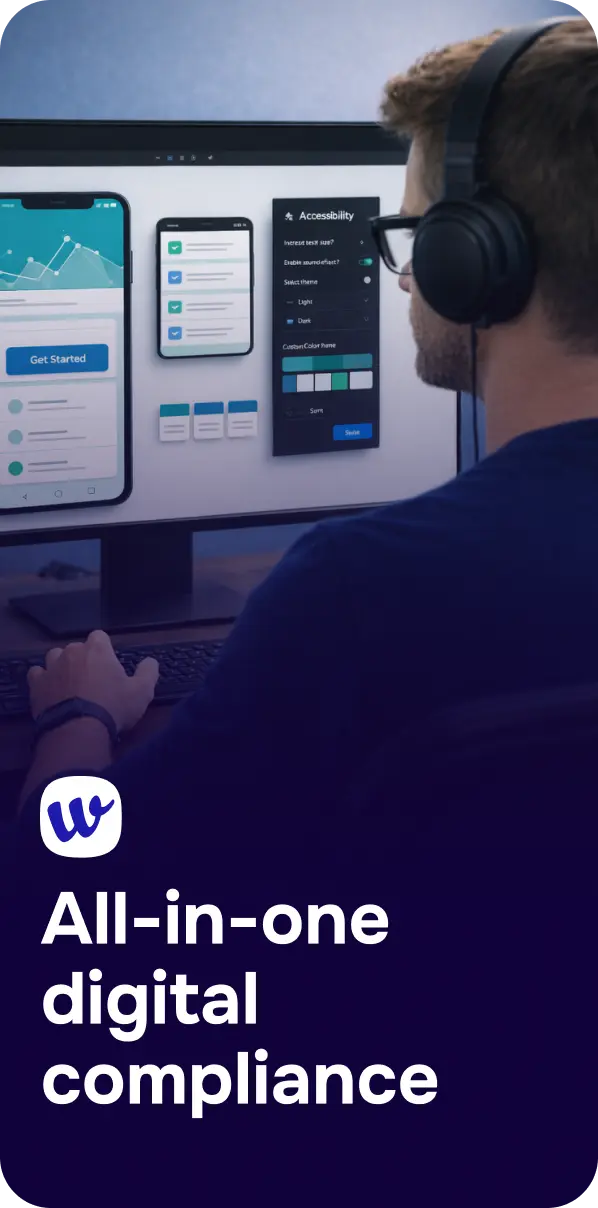
Unlike traditional overlays, the Corpowid Accessibility Widget is designed for real user needs—not as a “cosmetic compliance stamp.” The widget offers more than twenty assistive features and supports nearly fifty languages. It provides meaningful usability improvements for people with visual impairments, dyslexia, ADHD, epilepsy sensitivities, cognitive challenges, and language barriers.
From text resizing to dyslexia modes, from motion reduction to color adjustments, it rewrites the browsing experience into something more inclusive—and works as a complement to real accessibility, not a shortcut around it.
https://corpowid.ai/accessibility-widget
All of these solutions—scanning, fixing, validating, testing, designing, enhancing—flow into one unified accessibility command center. Instead of juggling vendors, platforms, and inconsistent reports, Corpowid gives you a single place to track progress, manage compliance, and orchestrate accessibility across your entire digital presence.
This eliminates fragmentation once and for all.
This eliminates confusion.
This eliminates the risk of missing critical requirements.
And most importantly, it ensures that accessibility becomes what it should be: a sustainable, continuous practice rather than a rushed, reactive task.
Not long ago, we saw a public institution proudly announce that they were “fully accessible” simply because they installed a single widget. It reminded us of someone claiming they can run a hundred meters in six seconds—impressive only to someone who has never seen what real performance looks like. In accessibility, reality always reveals itself. Shortcuts don’t hold up, quick fixes don’t last, and inflated claims collapse the moment an expert takes a closer look.
True accessibility requires continuity, intelligence, and ownership. That’s what Corpowid was built for: a unified ecosystem that transforms accessibility from a fragmented obligation into a seamless, ongoing practice that improves every part of your digital experience.
And if you’re wondering where your organization stands right now, you don’t need to guess.
You can check your website’s accessibility scores instantly, free of charge, and without creating an account — directly on our website.
It takes seconds, and it’s the easiest way to understand your current WCAG compliance status before taking your next step.
Whenever you’re ready to move from insight to action, Corpowid is here to help you build truly inclusive, future‑proof digital experiences.
👉 Start by checking your accessibility score for free, or book a full demo at:
https://corpowid.ai/contact
The ADA Title II deadline extension may look like extra time, but for many public entities it mainly shifts pressure rather than removing it. Here’s why waiting can increase accessibility risk and what teams should prioritize now.
A year into the European Accessibility Act, businesses are moving from theory to operational readiness. Here’s what enforcement has actually looked like, where teams are getting caught out, and how to build a stronger accessibility process.
Corpowid has been recognized by Gartner, a leading global research and advisory firm, for our innovation and performance in digital accessibility. These badges reflect our commitment to creating inclusive, AI-powered web experiences.





 TR
TR