Accessibility isn’t just a box to tick anymore—it’s becoming the secret sauce for sustainable product growth. In 2026, mobile apps run nearly every part of our daily lives, from banking and transportation to entertainment and healthcare. And regulators in the USA and EU are tightening the rules to make sure these apps actually work for everyone, not just the average user.
The message is loud and clear: if your app isn’t accessible, you’re not only risking legal trouble—you’re losing users, credibility, and revenue.
For years, accessibility had a reputation as a last-minute patch job—something teams rushed to fix right before launch. That approach doesn’t hold up anymore.
Modern product teams are embracing accessibility by design, meaning accessibility is integrated into:
This shift isn’t just philosophical—it’s financial. Building accessibility in from day one dramatically reduces rework costs and eliminates painful redesigns. It also creates more intuitive, consistent, user-friendly interfaces for everyone, not just users with disabilities.
Think of it like building a city: it’s much easier to include ramps, signage, and wide sidewalks during construction than to come back and “retrofit” the entire infrastructure later.
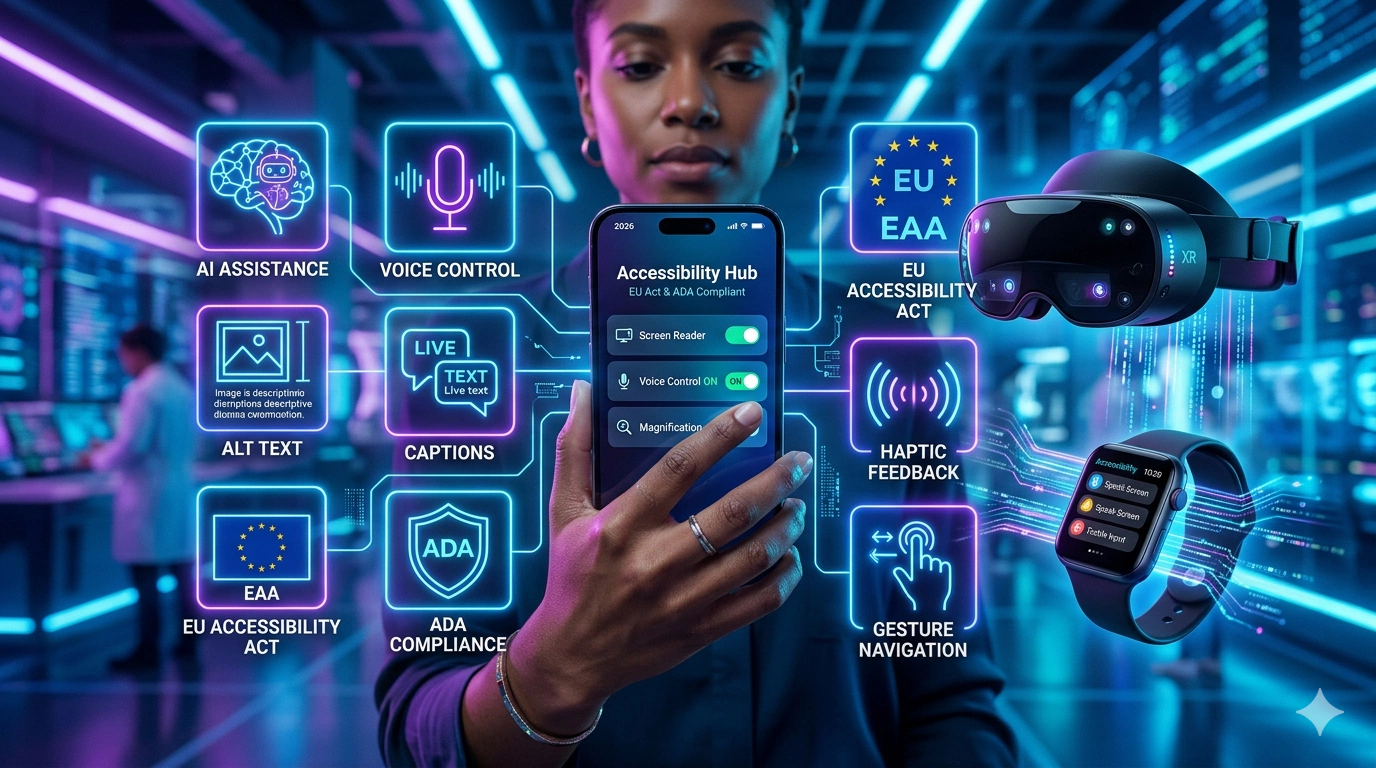
AI has completely transformed the accessibility toolkit. Today, AI can:
But here’s the reality: AI still doesn’t fully understand nuance, culture, brand tone, or sensitive content.
That’s why the teams seeing the biggest wins are pairing:
🧠 AI speed + 🎯 human judgment
AI handles the repetitive tasks at scale, while accessibility experts ensure accuracy, context, and user empathy. This hybrid approach is becoming the gold standard for reliable, scalable accessibility.
Accessibility today extends far beyond buttons, colors, and screen readers. The way people interact with technology is evolving fast.
In 2026, users expect accessibility across:
And regulators are catching up.
Accessibility is no longer limited to small screens. It’s about all the ways humans interact with digital ecosystems.
ADA Title III lawsuits continue to climb every year. Courts are consistently ruling that mobile apps are “places of public accommodation,” meaning they’re legally required to be accessible, just like physical stores or services.
The European Accessibility Act (EAA) becomes fully enforceable by 2025–2026. Non-compliant apps may face:
Accessibility is officially shifting from a “nice-to-have” to a non-negotiable legal requirement across both markets.
Here’s the part most companies overlook: accessibility isn’t only about avoiding lawsuits—it’s a massive growth lever.
Accessible apps:
In increasingly competitive USA and EU markets, accessibility has become a true competitive advantage. Companies leading in inclusive design aren’t just compliant—they’re winning users, improving retention, and strengthening their brand identity.
Accessibility in 2026 is about more than compliance or avoiding fines. It’s about building products that truly work for everyone—and that’s good for business.
Companies in the USA and EU that get this right aren’t just meeting legal standards; they’re future-proofing their products, earning user trust, and opening doors to massive new market segments.
Accessible apps win—not just ethically, but strategically.
The ADA Title II deadline extension may look like extra time, but for many public entities it mainly shifts pressure rather than removing it. Here’s why waiting can increase accessibility risk and what teams should prioritize now.
A year into the European Accessibility Act, businesses are moving from theory to operational readiness. Here’s what enforcement has actually looked like, where teams are getting caught out, and how to build a stronger accessibility process.
Corpowid has been recognized by Gartner, a leading global research and advisory firm, for our innovation and performance in digital accessibility. These badges reflect our commitment to creating inclusive, AI-powered web experiences.








 TR
TR